Ice giant
Uranus
What you can realistically expect
A pale-blue ice giant, just at the edge of naked-eye visibility.
IntermediateWhat is it?
Uranus is roughly four times Earth's diameter and orbits far beyond Saturn. Its atmosphere gives it a faint blue-green tint.
What will I see?
Naked eye
Barely visible under very dark skies as a faint 'star'. Star charts are essential.
Binoculars
A dim blue-green point — indistinguishable from stars without careful comparison.
Small telescope
A tiny, pale blue-green disc. Surface features are not visible in amateur telescopes.
Reference imagery from long-exposure photography usually shows far more colour and structure than the human eye can see through a telescope.
Reference image
Photograph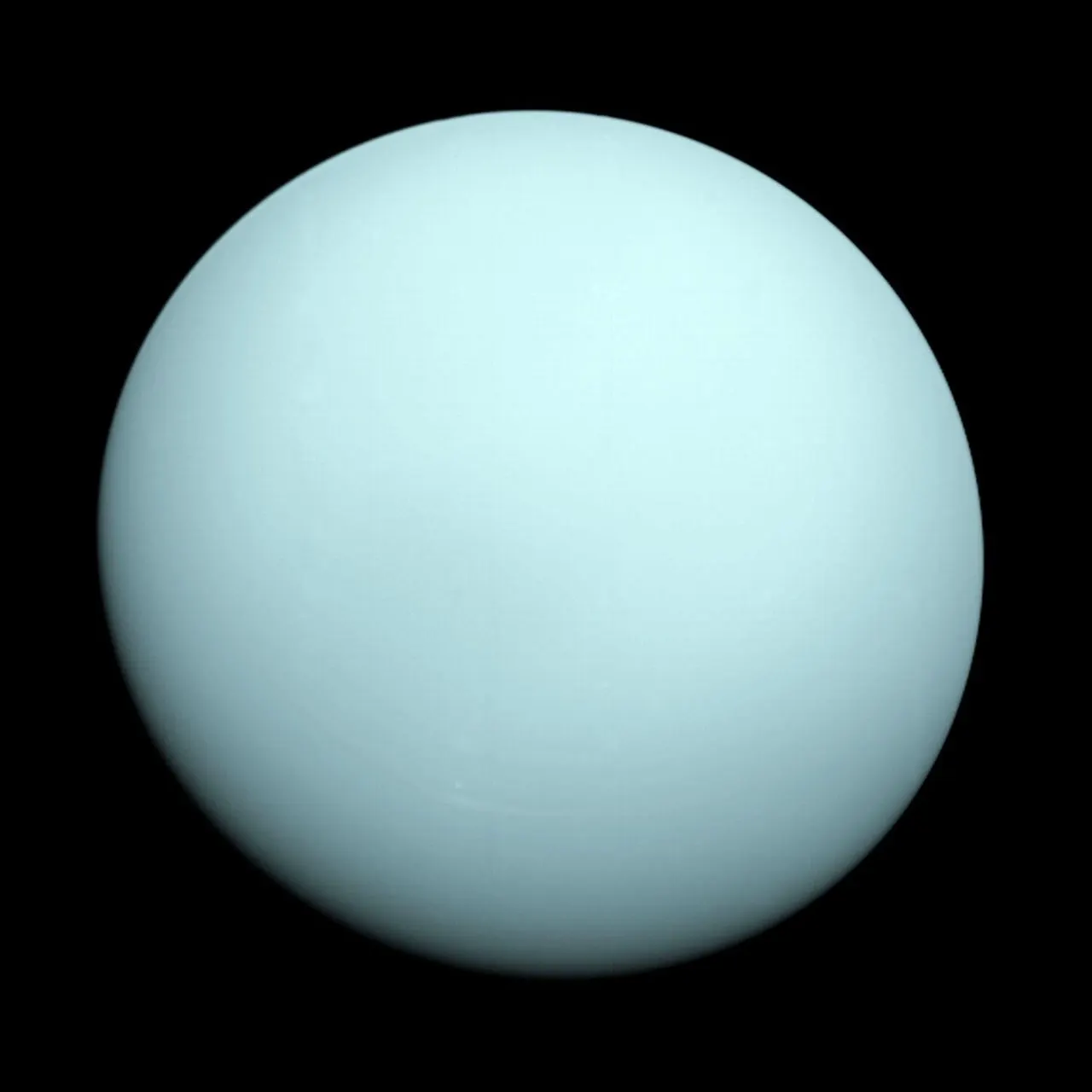
NASA/JPL-Caltech · NASA Science
Long-exposure or processed astronomy images can show much more colour and structure than you may see through an eyepiece.
Observing tips
- Use Find in Sky to point precisely — Uranus is easy to miss without help.
- Under dark skies its colour is subtle but present.
Interesting facts
- Rotates on its side — its poles alternately face the Sun over an 84-year orbit.
- About 20 times farther from the Sun than Earth.