Back to TonightFind in Sky 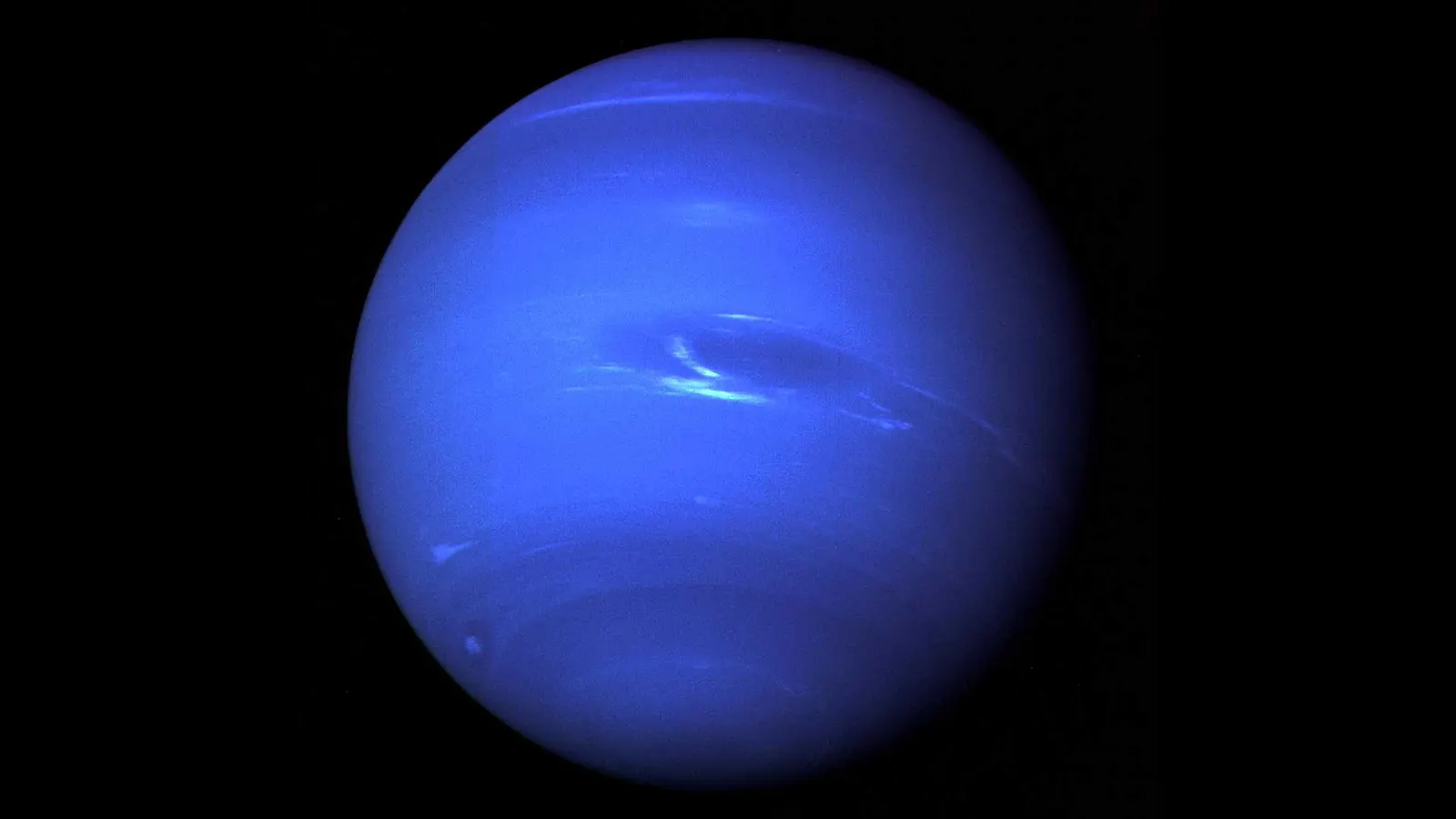
Outermost planet
Neptune
What you can realistically expect
Neptune is fainter and smaller than Uranus. Even at high magnification it stays a tiny bluish point. Very transparent skies help.
The most distant major planet — always requires a telescope.
ChallengingWhat is it?
Neptune is the outermost of the eight major planets, similar in size to Uranus. It appears as a small, distinctly blue disc in a telescope.
What will I see?
Binoculars
A faint blue point of light — very difficult to distinguish from field stars.
Small telescope
A tiny blue disc, roughly star-sized at low magnification. Higher magnification confirms the disc.
Reference imagery from long-exposure photography usually shows far more colour and structure than the human eye can see through a telescope.
Reference image
Processed imageNASA/JPL · NASA Science
Long-exposure or processed astronomy images can show much more colour and structure than you may see through an eyepiece.
Observing tips
- Use precise pointing — Neptune is faint enough that you may not identify it visually without help.
- Its striking blue colour is subtle but distinguishable from nearby stars.
Interesting facts
- About 30 times farther from the Sun than Earth.
- Takes 165 Earth years to orbit the Sun.